
This interview with the producer and leader of Bass Culture Players, Santi Mijarra, is an introduction to the next release on Seafront International.
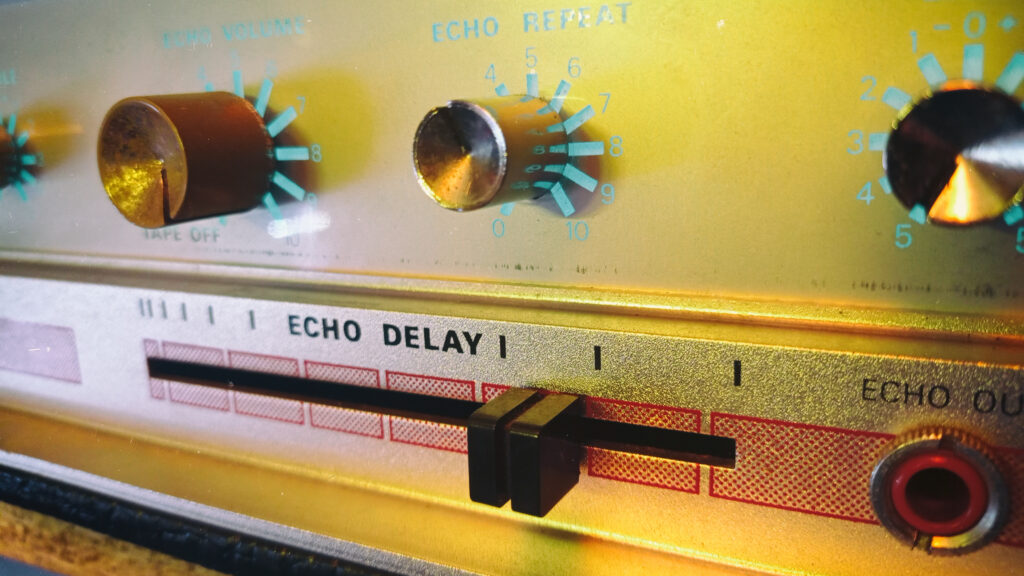
Bass Culture Players is a collective of musicians from Madrid, Spain. They create authentic roots reggae music, using vintage techniques and recording live instruments.
Edited by Jan Kulikov
All photographs courtesy of Santi Mijarra / Bass Culture Players
Q: Tell us a bit about yourself and Bass Culture Players. How your involvement in music begun? What’s the philosophy behind the collective?
A: The beginning of Bass Culture Players (BCP) was not accidental; since the second half of the 1990’s, I have been participating in fanzines and other bands, such as Bangarang and Hotdrop – all these projects were related to Jamaican roots music.
It was in 2008 when we began creating rhythms that would later see the light in our first showcase called ‘Dub Box’ in 2011, although previously we have released a couple of digital reggae rhythms.
At that time, we also were broadcasting Bass Culture Reggae Radio show, which aired from 2002 to 2015, so we decided then to bring all our activities together within the same concept. It wasn’t a tough decision to make.
The philosophy behind our projects has always been strongly influenced by self-management, the ‘Do It Yourself’ approach and collective work.
Q: How does it feel to produce roots reggae today? How do you see the future for the authentic reggae music?
A: I think it’s a matter of choice and taste.
Initially, the project was somewhat more open – stylistically speaking – but always focused on a rootikal approach. We have released live recorded music – let’s say with toccata – as well as more digital production all under the name of BCP. Some years ago we made a decision to promote organic music. It has its benefits and indeed its difficulties.
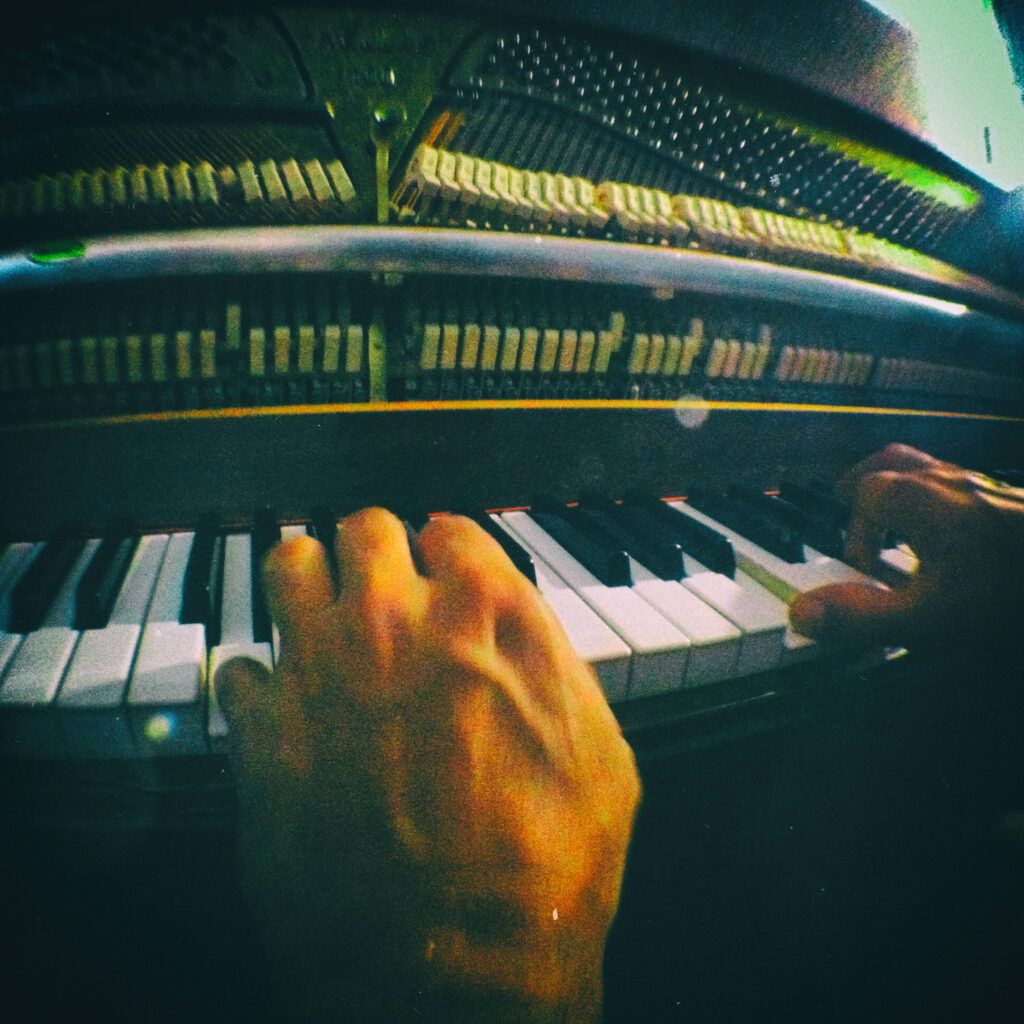
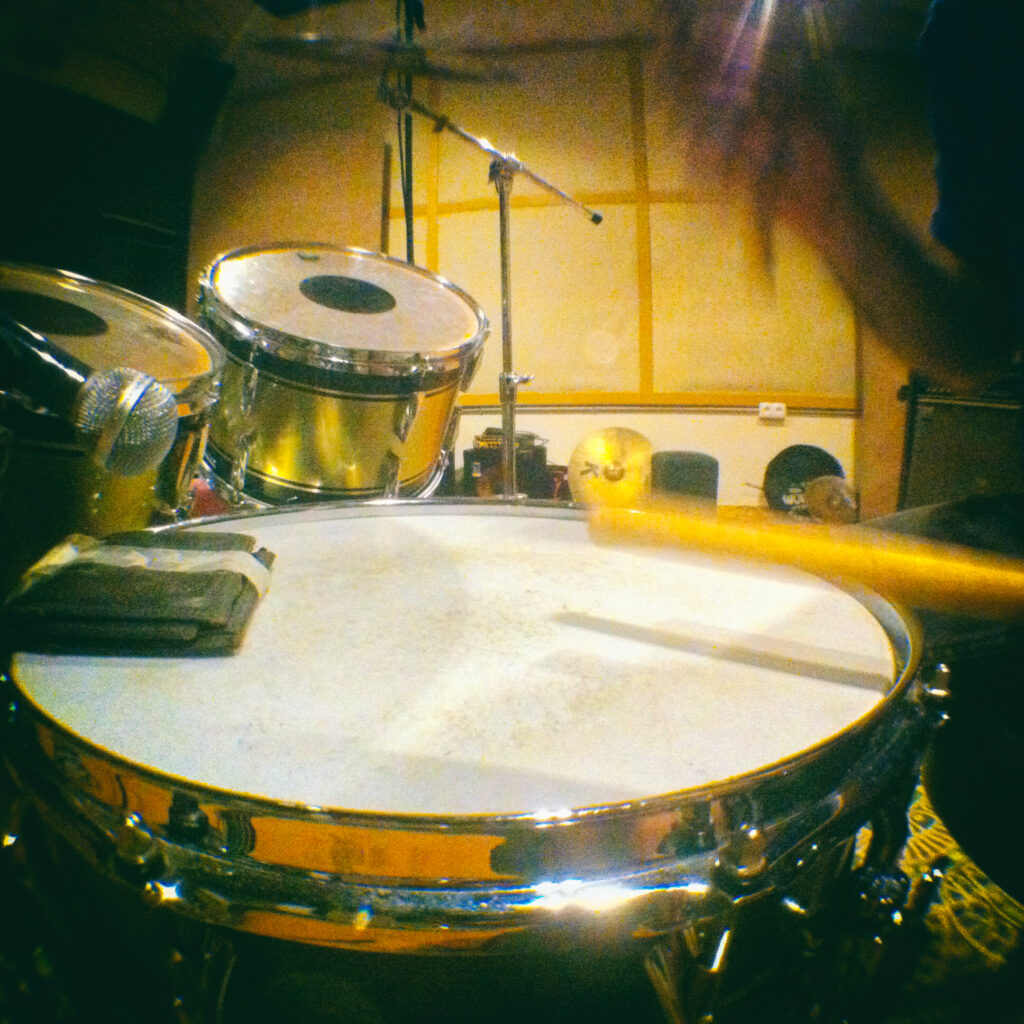
Recording live instruments complicates the production process, as specific circumstances are needed to set up the recording sessions or choose the musicians involved, but from our point of view the outcome is more satisfying.
Nowadays, making music is easier than ever; one can make music and achieve more than acceptable results with minimal equipment.
Also, in this age of information and disinformation (it must be said), there are lots of streaming platforms and, with that, a great offering. In some way, we live overstimulated and saturated with so much information, and Reggae music has never been immune to all this.
I think there will always be a place for foundational reggae music, but I believe that as the great legends pass away, a part of their spirit leaves with them. Fortunately, there are many of us who love Jamaican roots music, and we are concerned to preserve this legacy by the best of our ability.
Incidentally, although new technologies such as AI are useful in certain ways, they can also be confusing. We already see this in music – that can be heard on all platforms – that it is not faithful to what we understand as the authentic heritage of Jamaican music. We must remain alert to these new forms of creation, but this would be another discussion altogether.
Hence the importance we place on maintaining organic processes.
Q: Tell us about the making of riddim for ‘Where Is The Love’.
A: We have many demo tracks that have never seen the light, and ‘Where is the Love’ is one example.
Specifically, the seed for this track was planted many years ago in digital style, but it was never released. We had a vocal track already recorded for this too, but the process dragged on, and the track ended up in the hands of Simon (of Seafront International), with whom we have been sharing music and projects for years. By coincidence, the rhythm reached Al Campbell’s ears during a dubplate recording session. He liked it, and here we are!
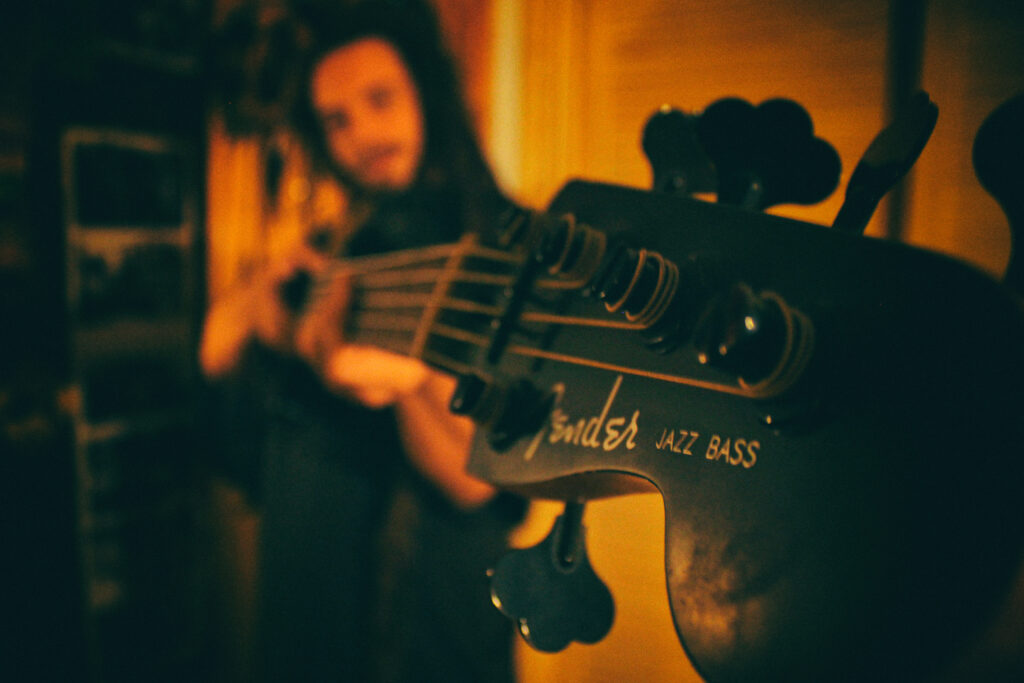
The recording was made with musicians such as Carlos Amalgamah on drums, General Soria on bass, Pablo Delgado on piano and organ, and myself on guitars and percussion.
Q: We know you use analogue equipment a lot. Tell us about your favorite bits of gear. How do you combine analogue and digital workflow?
A: I definitely love tweaking everything I can when mixing! Studio setups have changed over the years. I suppose it’s natural to start with a small amount of equipment, and then expand, acquiring new gadgets and getting rid of the old ones. I’ve always kept in mind that the budget for both maintenance and acquisition of new equipment must be sustainable.
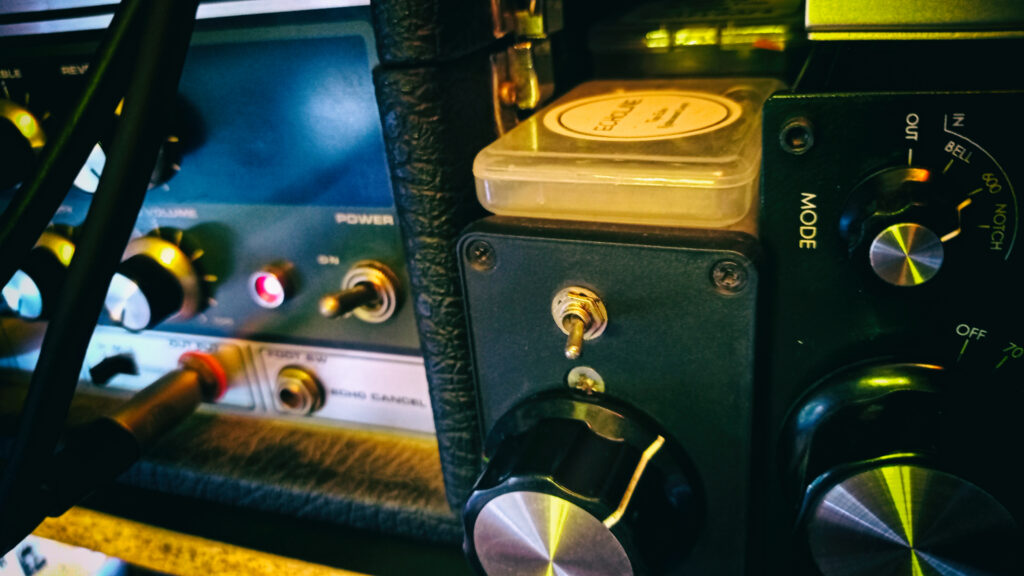
The first tracks I experimented with mixing were those we recorded with the band Bangarang, but one of the very first times I did something similar to a dub mix was with a double cassette deck, recording some tracks over others. That was quite an experience, those were the days…
After a few years, I decided to buy a 16-channel mixer, which I used for mixing for quite a few years. It was in 2015 that I got the mixer I currently work with, a 32-channel Midas.
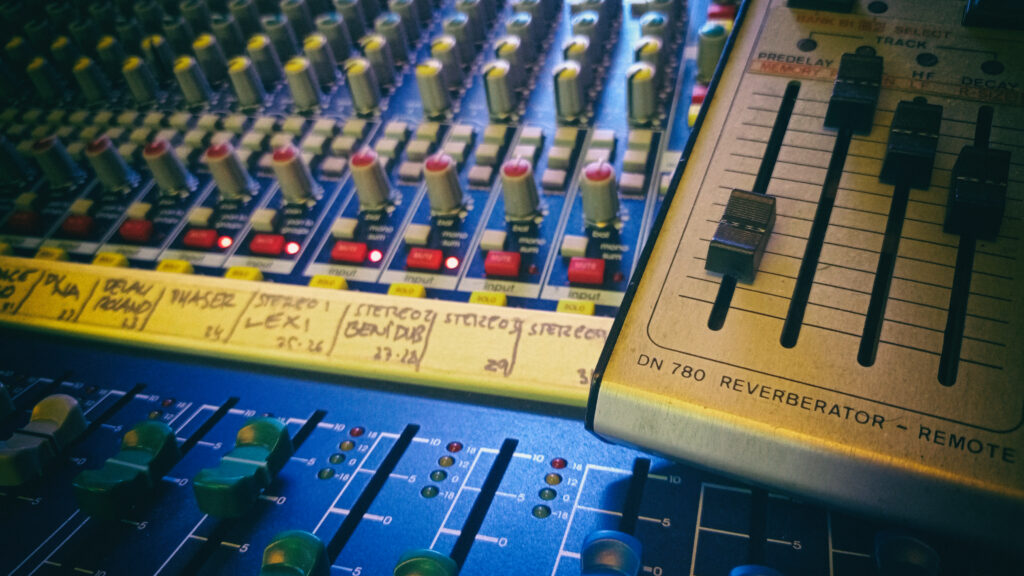
The same thing happened to the outboard gear. I’ve been lucky enough to be able to mix with different types of equipment, spring reverbs, tape delays, digital reverbs and delays, and I can honestly say that I’m happy with the setup I have now.
Apart from personal taste, all these tools are what give the music its character, which is why you can discover different sounds and tones in different productions over the years, regardless the type of production.
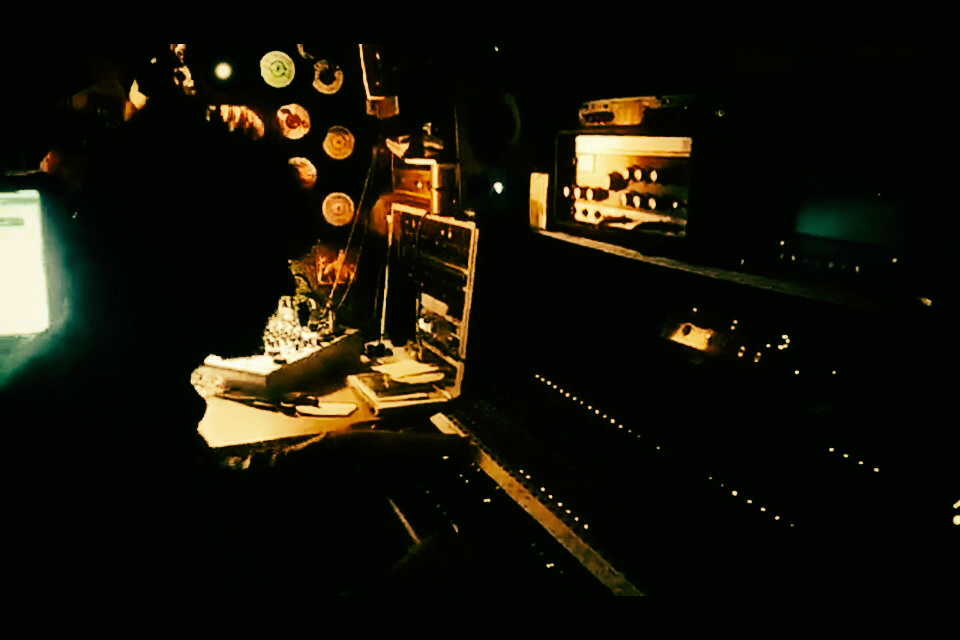
As for the workflow, I always do pre-production ‘in the box’, and then transfer it to the console, where I do practically all the work. I go back to the DAW to fine-tune certain aspects such as equalisation, panning in stereo tracks and analysing what comes from the console.
I won’t lie – after a few rounds back and forth, the mixes end up being almost ready. I say almost ready because, at least in my case, they never end up being perfect afterwards… there’re always some small details that I would have done differently, but you always have to look forward. That’s the point of mixing in an analogue environment – the every mix is different.
We say thank you to Santi for sharing his thoughts with us, and we are really looking forward to announce the upcoming release featuring the great Al Campbell and Bass Culture Players.
Listen and pre-order our next release Where Is The Love (EP) by Al Campbell and Bass Culture Players via label’s Bandcamp page!